
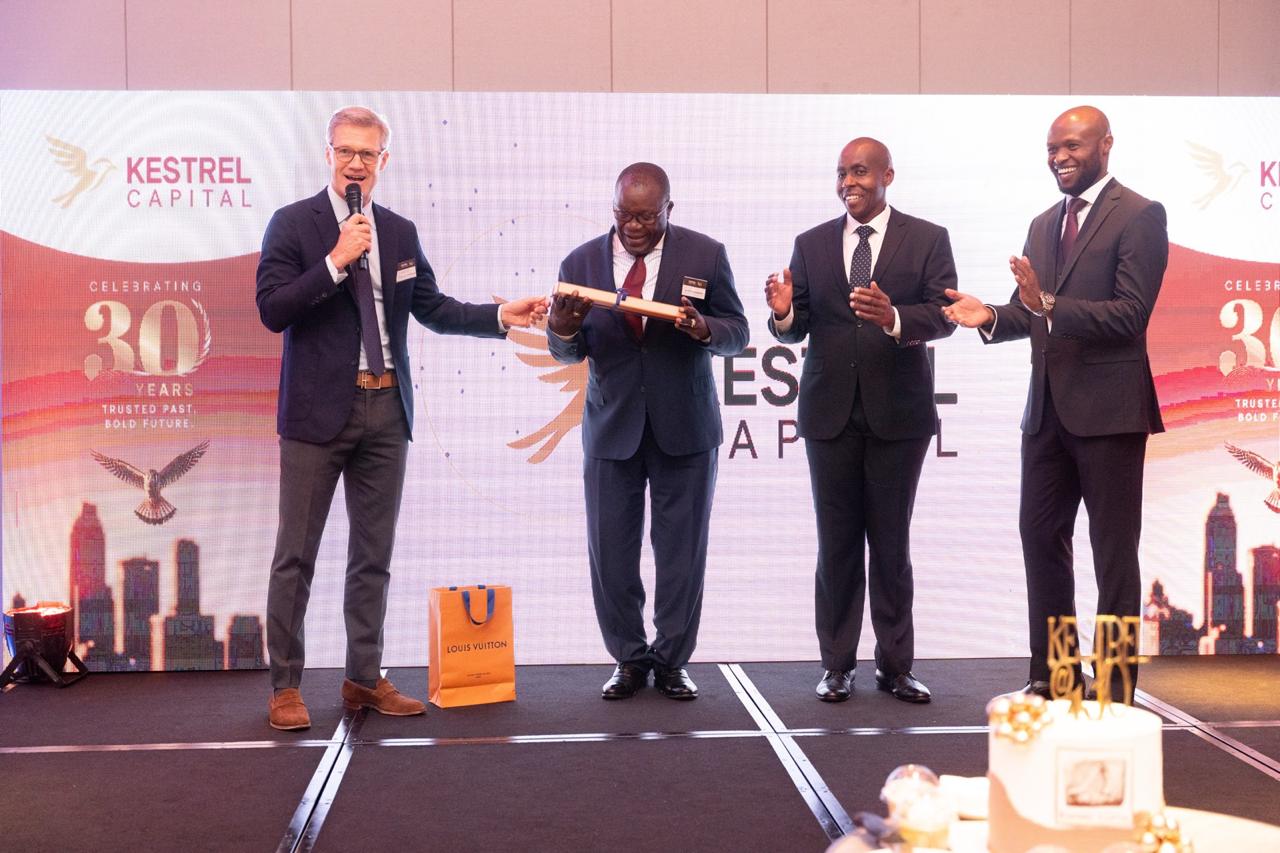
When Kestrel Capital East Africa Limited announced its landmark acquisition by Theo Capital Holdings Ltd through a Management Buyout (MBO), it marked more than a historic transaction. It was a defining statement, that African managers are ready, willing, and able to take the helm of the continent’s most respected financial institutions.
The deal, unveiled during Kestrel’s 30th anniversary celebration, represents Kenya’s first management buyout in capital markets history ; a moment of renewal that bridges legacy with leadership continuity. Under the stewardship of Francis Mwangi, who remains CEO of Kestrel Capital, and Eric Ruenji, Chairman of Theo Capital Holdings, the firm is poised to enter a new phase of growth built on local expertise, conviction, and a deep belief in Africa’s markets.
The Strategic Case for Management Buyouts

In an era where global capital increasingly flows into African markets, the management buyout model is emerging as a powerful tool for sustainability, stability, and value creation. Unlike traditional acquisitions driven by external investors, MBOs are powered by the people who know the business best , its leadership team.
This alignment of vision, experience, and ownership creates continuity in both performance and culture. It retains institutional memory, reinforces client trust, and signals long-term commitment to growth.
At Kestrel Capital, the MBO ensures the continuation of three decades of excellence while unlocking the agility to innovate, digitize, and expand into new frontiers of investment. As Francis Mwangi noted, “This acquisition is about conviction, opportunity, and belief in the power of markets.”
Such conviction is exactly what Africa’s financial future demands , leadership that combines strategic foresight with grounded understanding of the continent’s realities.
Why African Managers Are the Way Forward

The growing momentum behind African-led ownership is no coincidence. Across sectors, there’s a visible shift toward empowering local executives to lead transitions , with good reason.
- Cultural and Market Intelligence – African managers bring an intrinsic understanding of local economies, regulatory frameworks, and investor psychology. This insight cannot be outsourced; it’s earned through lived experience and proximity to the market.
- Leadership Continuity – An MBO prevents the cultural dissonance often seen in foreign-led transitions, preserving trust among employees, clients, and regulators.
- Sustainable Growth – Local leadership fosters decisions that prioritize long-term value creation over short-term gain, aligning business performance with national and regional development goals.
- Investor Confidence – In capital markets, confidence is currency. A management-led transition reassures clients that the company’s DNA ; its people, values, and reputation — remains intact.
Kestrel’s buyout is therefore not just a change in ownership; it’s an affirmation that Africa’s financial leadership has come of age.
From Heritage to Innovation
 For over 30 years, Kestrel Capital has been synonymous with trust, professionalism, and innovation, pioneering research, executing landmark deals, and consistently ranking among the top stockbroking firms on the Nairobi Securities Exchange.
Now, under its new African-led ownership, the firm enters a new era: one focused on democratizing investments, deepening access through technology, and expanding regional connectivity.
“Theo Capital honors Kestrel’s legacy while adding accessibility, global connectivity, and innovation,” said Eric Ruenji. “This is more than an acquisition; it is the start of Kestrel’s bold future.”
Indeed, it signals a future where legacy institutions evolve not by relinquishing control to external capital, but by empowering their own leaders to shape destiny from within.
The Broader Implication

Kestrel’s management buyout is more than a first , it’s a signal. A signal that African capital markets are maturing, that succession planning and localized ownership are being redefined, and that the next phase of Africa’s growth will be led by its own professionals.
As capital flows diversify and regional integration deepens, the sustainability of African enterprises will depend on who owns and drives them. Management buyouts, rooted in knowledge and continuity, present a compelling blueprint for that future.
Kestrel Capital’s transition is therefore not just a business story , it’s a continental one. It represents the dawn of an era where Africa’s brightest managers step forward not only as stewards of global capital, but as architects of its own financial destiny.
From heritage to innovation. From continuity to conviction. Kestrel Capital’s story is proof that Africa’s leadership moment is now , and it begins with belief in our own.
By Mary Wamae
Share This Story, Choose Your Platform!
CAPTIVATING READS

Our blog is packed with articles and stories based around lifestyle, business, design and wellbeing. Subscribe now to get all of our updated directly to your inbox every week.