
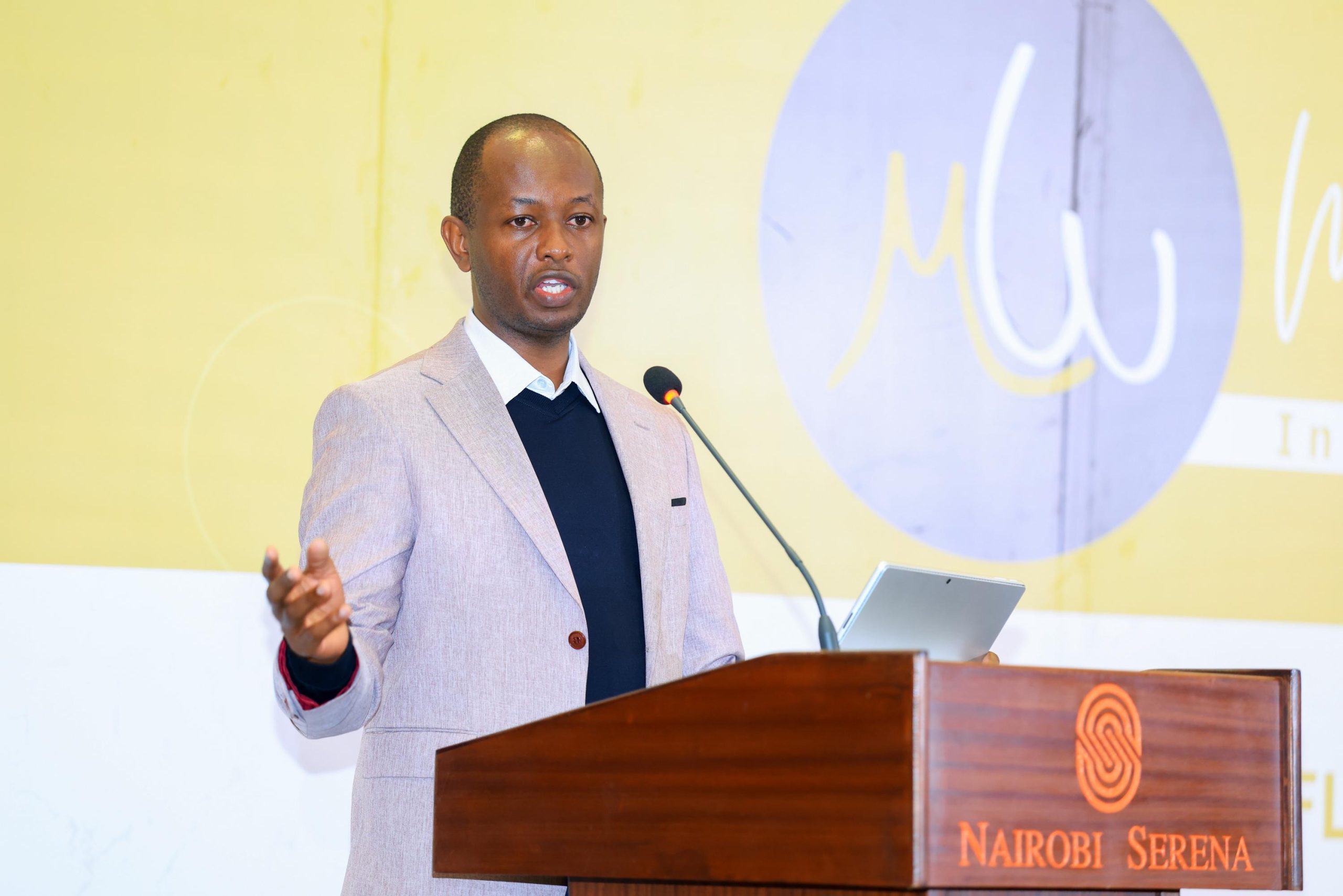
Ken Mbae’s journey from fresh graduate to Managing Director of Centum illuminates a transformative truth about leadership: our most important education begins precisely when formal education ends.
His candid reflection on arriving at his first job, expecting to do nothing more than read payslips and bank statements, captures a pivotal moment many professionals experience. We believe credentials mark completion rather than commencement. Ken’s awakening reveals something profound: for our contributions to truly matter, we must fall in love with continuous learning. Books became his vehicle for traveling through time, accessing centuries of wisdom and global experience for a modest investment.
This insight reframes professional development entirelyl continuous learning isn’t obligation, it’s strategy. It’s how we compress decades of experience into years, how we learn from distant successes and failures, how we build upon rather than repeat what others have already discovered.
Redefining Legacy as What Continues
Ken offers a compelling definition of legacy that shifts our perspective on professional success: legacy is what remains when you’re no longer in office, what endures after you’ve left. It won’t be measured by titles held or wealth accumulated, but by what continues, what sustains itself, generates ongoing value, and influences future generations.
This framing invites reflection rather than judgment. It asks each of us: What are we building that will outlast our tenure? What value are we creating that extends beyond our immediate benefit? What are we contributing that future leaders can build upon?
These questions aren’t meant to diminish any achievement, but to expand our vision of what’s possible. They invite us to think beyond quarterly results toward generational impact, beyond personal success toward collective advancement.
Documentation as Institutional Gift
Ken identifies documentation as the essential bridge between individual achievement and enduring legacy. When we identify problems and create solutions, documenting that journey transforms private experience into shared resource.
This principle celebrates the leaders who choose to write, to share, to make their lessons accessible. It recognizes that documentation is generosity; converting hard-won insights into infrastructure others can use to accelerate their own progress. When leaders document their journeys from villages to boardrooms, from engineering to banking, from imagination to achievement, they create navigational tools for those following similar paths.
Documentation democratizes learning. It allows someone in Nairobi to benefit from lessons learned in New York, someone starting today to build on insights gained over decades, someone with limited resources to access wisdom that might otherwise remain inaccessible.
Converting Imagination into Achievement
Ken articulates a powerful progression: convert your imagination into ability, then believe in what seems impossible and achieve it. This isn’t abstract inspiration, it’s practical methodology for transformational leadership.
Imagination generates possibility. Ability converts possibility into action. Belief in the impossible creates permission to attempt what conventional wisdom hasn’t yet embraced. Achievement validates the entire progression and creates proof points for the next wave of audacious thinking.
This progression requires courage, the willingness to operate beyond current capacity, to accept opportunities that stretch us, to trust that commitment often generates the capability we need. As Ken notes, sometimes you must believe in yourself and “pull it off,” discovering resources you didn’t know you possessed.
Building Institutions Greater Than Ourselves
Ken’s principle about building institutions greater than any individual represents sophisticated leadership thinking. Centum should be greater than Ken Mbae. Organizations should thrive independent of any single person’s presence.
This isn’t about diminishing individual contribution, it’s about amplifying collective capacity. When we build institutions that transcend individual personality and presence, we create entities capable of sustained impact across generations. We develop systems that work, cultures that endure, and value propositions that outlast any particular leader’s tenure.
Building institutions greater than ourselves is the ultimate expression of servant leadership. It means investing in people who will exceed our own capabilities, creating systems that function without our constant intervention, and developing cultures that embody values larger than any individual perspective.
Thinking at Scale
Ken’s vision challenges us to think bigger. If businesses elsewhere employ millions, why shouldn’t businesses here aspire to similar scale? We possess talent, markets, resources, and creativity in abundance. What’s required is audacity married to execution.
This isn’t about comparison, it’s about possibility. It’s recognizing that constraints often exist in imagination rather than reality, that we frequently think too small rather than too large, that our businesses and institutions can achieve transformational scale when we dare to envision it.
Thinking at scale means building something that matters, something that lasts, something that lifts collective humanity.
Leadership as Torch-Passing
Ken’s closing insight beautifully reframes leadership: it’s not a title, it’s a torch we pass to future generations.
This metaphor captures everything essential. Leadership is about illumination, about transmission, about ensuring those who follow can see further and climb higher. The measure of our leadership isn’t how brightly our torch burned while we held it, but whether it remained lit as we passed it forward.
Build institutions. Document journeys. Think at scale. Pass the torch forward with the flame burning bright.
This is how individual achievement becomes generational legacy.
Ken Mbae
Share This Story, Choose Your Platform!
CAPTIVATING READS

Our blog is packed with articles and stories based around lifestyle, business, design and wellbeing. Subscribe now to get all of our updated directly to your inbox every week.