
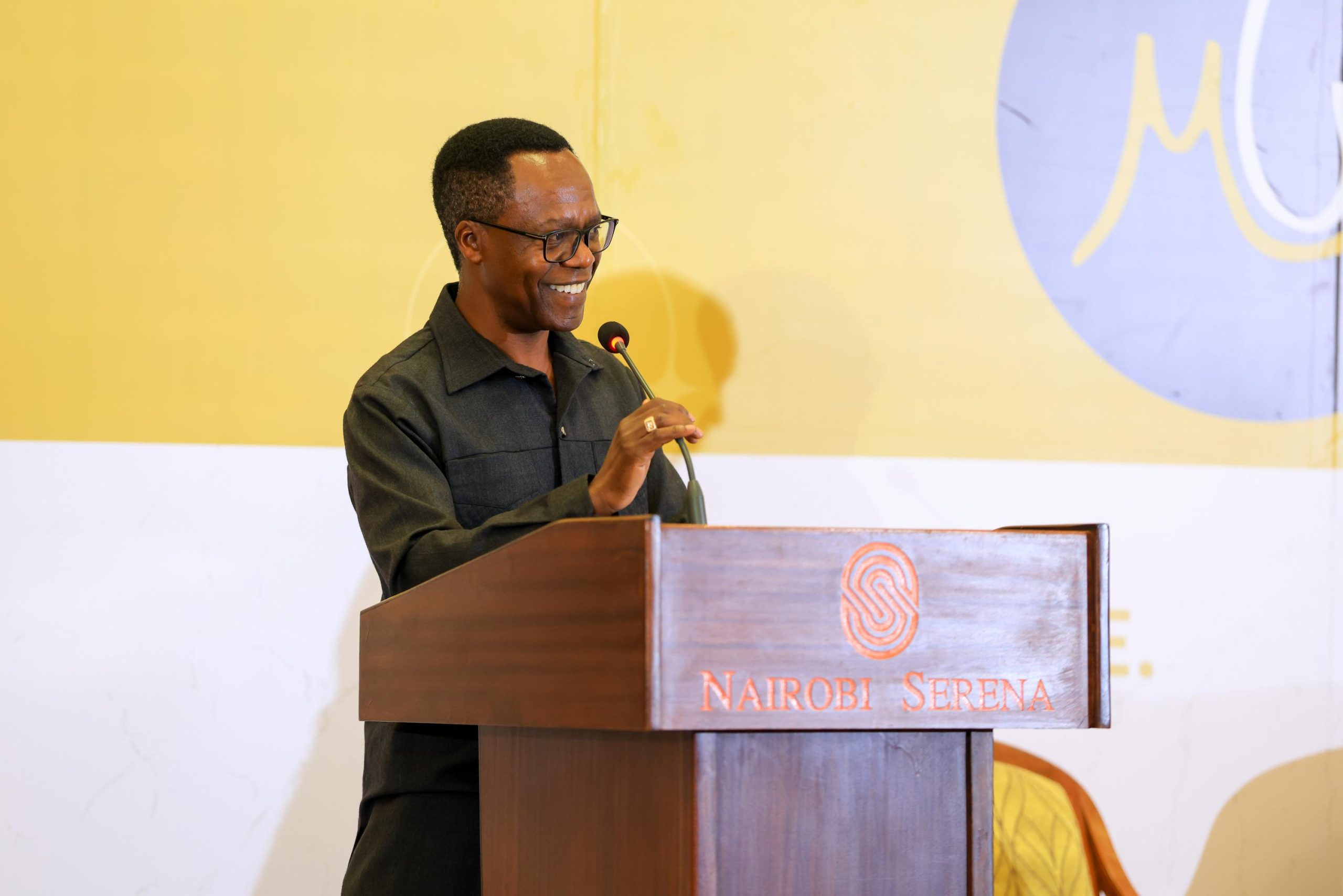
When John Gachora, NCBA Group Managing Director, stood at the Annual Leadership Breakfast Summit to celebrate the launch of From The Village To The Boardroom: A Journey of Purpose, Power and Legacy, his remarks transcended ceremonial congratulations. As a fellow village leader who navigated into corporate boardrooms, John articulated a principle I’ve intuited but perhaps inadequately expressed: the ethical imperative of documenting our trajectories while we retain the clarity, courage, and contextual intelligence to render them truthfully.
His address wasn’t mere endorsement,it was a sophisticated argument for why leadership documentation matters and why temporal positioning is strategic.
Literature as Career Architecture
John’s disclosure about his professional metamorphosis carried profound implications. An engineer transformed into a banker, not through serendipity, but through the catalytic intervention of two narratives: Liar’s Poker by Michael Lewis and Barbarians at the Gate. These weren’t pedagogical texts or vocational guides; they were immersive accounts that illuminated latent possibilities and catalyzed reimagination.
This revelation validates a thesis I’ve long held: our documented journeys function as navigational infrastructure for others. When John encountered those Wall Street narratives, someone’s decision to write with unvarnished authenticity created cognitive portals through which he could envision alternative futures. This is precisely my authorial intent; not to memorialize personal achievements, but to architect those same portals for individuals positioned where I once stood, questioning whether their aspirations align with achievable reality.
The literature that reshapes professional trajectories often operates subtly, planting conceptual seeds that germinate into career pivots, strategic recalibrations, and reconstructed identities. Had those authors delayed, sanitized, or never documented their experiences, John’s trajectory and by extension, the cascading influence he’s generated across thousands, might have manifested entirely differently.
The Mortality Constraint on Truth-Telling
John shared an anecdote that generated collective laughter yet left me contemplating. His friend published an autobiography, then immediately promoted an “updated version” after John
completed the original. The rationale? Certain figures central to the narrative had died, finally permitting the author to document complete truth about them.
Beneath the humor lies a sobering reality about deferred documentation: extended delays create an impossible ethical paradox. Do we sanitize narratives to protect living subjects, or postpone truth-telling until mortality removes interpersonal constraints? Neither approach serves veracity, and neither generates the actionable wisdom emerging leaders require.
This is why John’s exhortation to “document your life when you can remember all of it” resonated with such force. Early documentation isn’t merely about mnemonic accuracy, it’s about intellectual freedom. When we chronicle our journeys proximately to their unfolding, we can render them completely while still inviting dialogue, correction, and collaborative meaning-making.
Accountable Narrative as Superior Methodology
John emphasized something methodologically crucial: document your life early “when people can question you about your life and what you write.” This isn’t cautionary, it’s an invitation to create dynamic documentation rather than static hagiography.
When I authored The Village Girl and subsequently From The Village To The Boardroom, I understood the subjects of my narratives remained accessible, engaged, and capable of offering counterperspectives. This accountability elevates difficulty while exponentially increasing value. It demands precision, cultivates intellectual humility, and creates opportunities for readers to engage not merely with my interpretative lens, but with polyvocal perspectives on shared experiences.
Accountable storytelling produces superior historiography and more pragmatic guidance. When our narratives remain subject to challenge, enrichment, and correction by journey participants, we construct multidimensional archives rather than monolithic mythologies.
Translating Village Epistemology into Corporate Contexts
John’s self-identification as a “village boy who also got into the boardrooms” created immediate recognition between us. This shared trajectory embodies specific intelligence that conventionalized leadership development frequently overlooks: we understand code-switching as survival skill, we recognize communal decision-making’s value within individualistic paradigms, and we carry the representational weight of entire communities in historically exclusionary spaces.
These convergent journeys warrant documentation not because they’re anomalous, but because they’re becoming foundational to contemporary African leadership. Each documented path incrementally reduces navigation complexity for subsequent cohorts of village children harboring boardroom aspirations.
A Generational Mandate
John’s address crystallized an essential truth: documenting our leadership trajectories is infrastructural. Those of us privileged to traverse from villages to boardrooms carry an obligation to those navigating similar terrain.
To fellow leaders on this path: write immediately. Document while cognitive acuity serves, while narrative subjects can engage dialogically, and while your insights retain contemporary relevance. Don’t await perfect retrospection or posthumous safety.
Our stories constitute critical infrastructure for leadership development. Construct them while architectural capacity remains intact.
The most valuable legacy isn’t what we achieved, it’s what we enable others to envision and pursue through our willingness to document truthfully, early, and completely.
John Gachora
Share This Story, Choose Your Platform!
CAPTIVATING READS

Our blog is packed with articles and stories based around lifestyle, business, design and wellbeing. Subscribe now to get all of our updated directly to your inbox every week.